
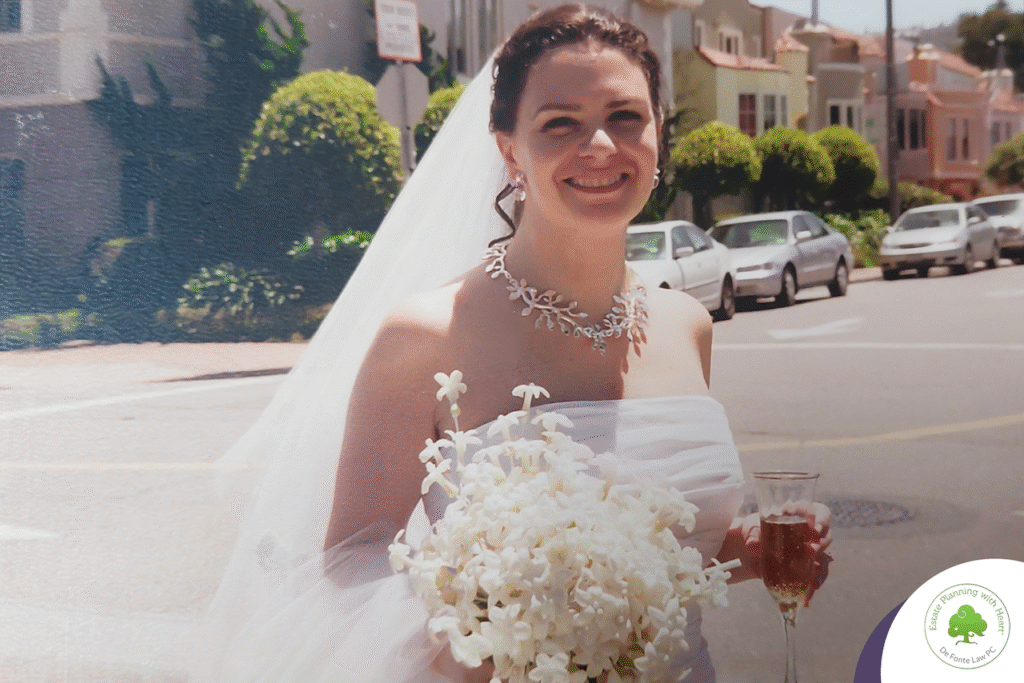
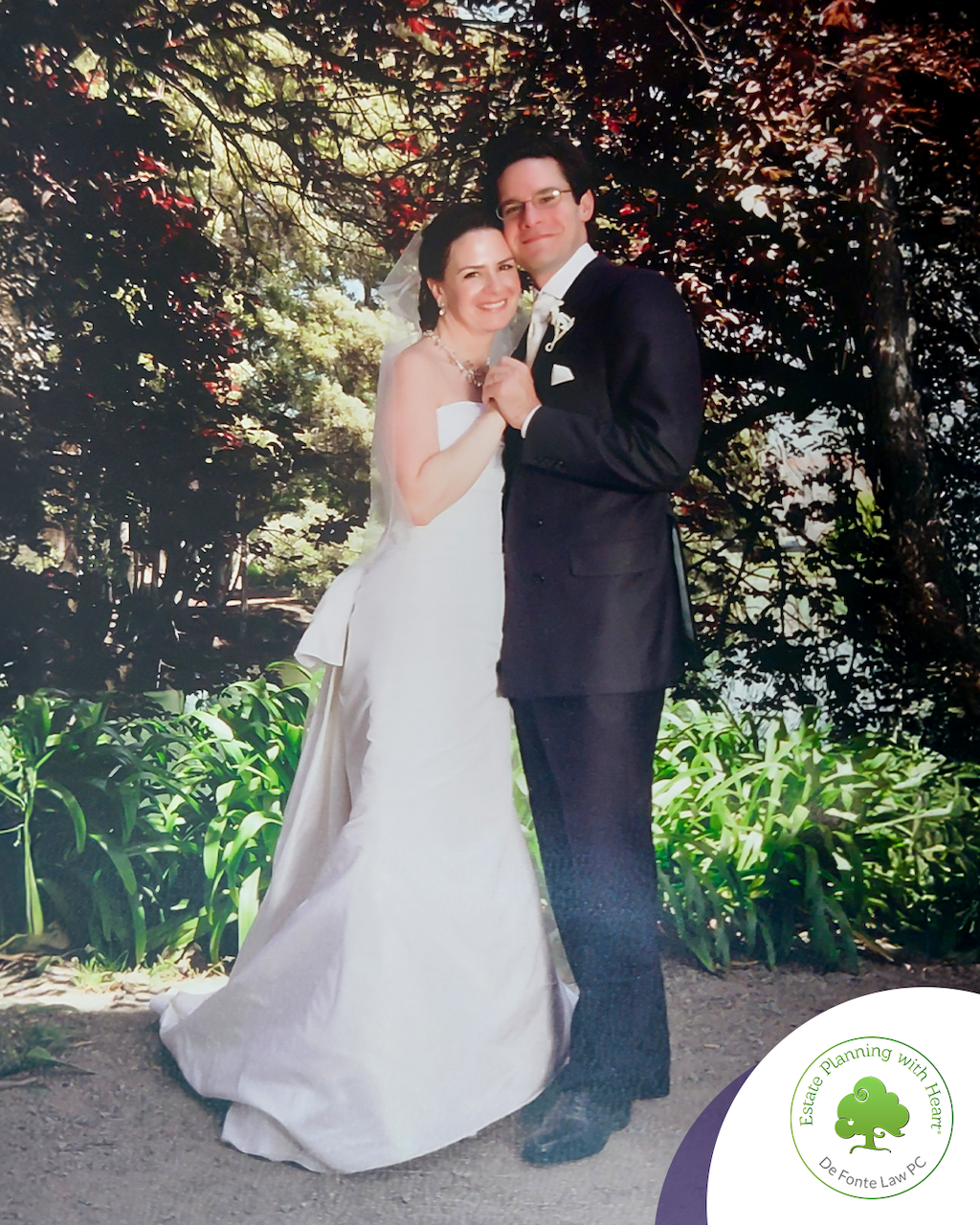
When I got married twenty years ago, I did not give law, insurance, or money any thought at all. I had hearts in my eyes and was so excited to have found my person. We were lawyers, and we didn’t talk to a lawyer, an insurance broker, or a financial advisor. We just got amazing outfits, invited 130 of our closest friends and family (still the same people for the most part!), hired a great chef and band, and filled the room with white tulips.
So far, so good. But we have had a few “learning experiences” that could have been avoided. With a busy career and two children, we certainly did not need the additional stress brought on by not taking care of business when we got engaged!
I just love weddings, and I love marriage even more. It is a joy and a privilege to work with engaged couples and newlyweds!
Just married or newly engaged? Congratulations!
Whether you have been together for a decade or it was love at first sight and you ran to the justice of the peace, as you build your married life together, it’s time to think about more than just your honeymoon and registry. You might not think that estate planning is romantic, but it’s one of the most powerful ways to protect your relationship and future. I cannot count on both hands the number of times that people tell us that working with my team brought them closer together with a shared vision for the future and a plan to take care of each other, for better and for worse (and the literal worst…..)
At De Fonte Law PC, we work with newlyweds and engaged couples throughout California who want to turn love into legal security, with care, clarity, and confidence. One of the most essential tools for newly married couples is a revocable living trust.
Here are nine reasons why newlyweds shouldn’t wait to create one:
1. Family Harmony
One of the hardest roles any adult may have to fill is a health proxy. Without clear instructions, your spouse might find themselves in conflict with your family of origin, especially parents or siblings who feel entitled to make health care decisions for you. What happens if you and your spouse do not share a religious faith? What happens if your mother insists you must be buried in the family plot, but you told your spouse you want your ashes sprinkled in the Indian Ocean?
Estate planning also avoids confusion and conflict when it comes to ‘who gets what’. California is a complicated community property state, and it is easy to accidentally completely or partially disinherit your spouse. Do you want your parents to own part of the home your spouse lives in? Do you want your parents to have to ask your spouse for financial assistance if something happens to you?
Do you have minor children? Who would serve as guardians? Do your families have expectations? Do you need a plan that allows your chosen trustee to spend money on family harmony and togetherness?
A great plan appoints the right people who are in charge, who inherit, and who should be consulted if you become incapacitated. With everything clearly spelled out, your family can focus on healing, not fighting.
2. Avoid Unintentional Disinheritance
In California, if you die without a will or trust, statutes clearly state who gets what. If you own property in your name only, your spouse may have no automatic right to stay in your home or inherit it outright.
A properly drafted trust ensures your spouse is protected and receives exactly what you intend.
3. Protect Separate and Community Property
California is a community property state, meaning what’s yours, what’s mine, and what’s ours can get complicated quickly, especially if one of you entered the marriage with significant assets or a business.
If you have a prenup or postnup, even more reason to act now. A trust helps define:
– Who gets what – because a prenup can disinherit a surviving spouse
– How assets are managed during a period of incapacity without cutting off your spouse.
4. Provide for Children (Now or in the Future)
Whether you already have children or are planning to start a family, a trust allows you to:
– Name guardians for your children
– Appoint the right people to manage their inheritance
– Decide how and when they receive their assets
Without a trust, a judge may choose guardians you wouldn’t allow a child to inherit outright at 18. A trust ensures your legacy is protected—and your kids are too.
5. Plan for Incapacity, Not Just Death
A common myth? That marriage gives your spouse automatic authority to make legal or medical decisions if something happens to you.
It doesn’t.
Without the right documents, your spouse may:
– Be unable to access your accounts
– Be denied authority to make medical decisions
– Be locked out of conversations with your employer, your doctor, or the IRS
A trust, combined with powers of attorney and a health care directive, gives your spouse the legal right to care for you when you need it most.
6. Avoid Probate
California’s probate system is:
– Expensive (fees are based on gross estate value, not net – so that mortgage on your house does not decrease your probate exposure (Check out our probate calculator!)
– Slow (two years is not an unusual amount of time for a probate matter in California – longer if the probate is contested. This is time your loved ones should spend healing, not navigating the courts.)
A fully funded trust avoids probate altogether. Your loved ones can access your assets quickly, privately, and without court supervision—just as you intended.
7. Maintain Privacy
If you die with no documents or only a will, it becomes a public court document. That means:
– Anyone can see who inherits what
– Estranged relatives can contest your wishes
– Creditors can come forward
– Public (if you die with no documents or a will, the distribution of your assets will be completely public, leaving your spouse and others at the mercy of the creeps and predators on the dark web)
A trust remains private. It protects your personal decisions from public scrutiny and gives your family peace of mind during a difficult time.
8. Align with Your Prenup or Postnup
If you’ve signed a prenuptial or postnuptial agreement, estate planning is critical. Prenups supersede California’s default laws to determine which assets are community property and which are separate property. A prenup without an estate plan will lead to chaos if you have mixed your separate and community property. A prenup that says one spouse owns the family home means that the surviving spouse may not inherit that property, or they will own it with the parents or minor children.
9. Start Your Marriage with Clarity and Intention
Estate planning isn’t just about documents—it’s about communication.
It opens the door to honest conversations about:
– Your values
– Your financial priorities
– What you want for your children and extended family
– What happens if something goes wrong
A trust gives you a structure to build your marriage on purpose, not just with love, but with clarity.
Ready to Plan Your Future?
Whether you just got married or are planning to tie the knot, now is the time to take action. Don’t wait until something goes wrong to start asking the right questions.
At De Fonte Law PC, we offer high-touch, values-driven estate planning for newlyweds and engaged couples across California. We don’t use templates. We don’t rush. We do this with heart.
Schedule your discovery call at www.defontelaw.com/contact and let’s protect what matters most—together.